
On this page
- The short answer: what causes climate change
- The main causes of climate change
- Burning fossil fuels
- Industry and cement
- Agriculture and land use: including deforestation
- Transport and buildings
- The health sector’s own emissions
- How each cause reaches our health
- Who is affected first and worst
- What would slow it down
- How climate change affects health systems
- What are heat-health action plans?
- How drought affects girls’ health and safety
- How much adaptation finance do developing countries need?
- Do countries’ climate plans mention health?
- How does climate change affect sexual and reproductive health?
- How many additional heat deaths could the current El Niño cause?
- What is the TAFF Mutirão roadmap for phasing out fossil fuels?
- Does India have a national target to cut air pollution?
- How is El Niño affecting health and water supplies in the Pacific?
- Frequently asked questions
Key points
- Climate change at global level is driven mainly by increased greenhouse gases in the atmosphere, largely from human activities, especially burning fossil fuels, together with land-use change, and alongside natural factors that have always affected climate.
- Greenhouse gases trap heat.
- WHO reports that 3.6 billion people live in areas highly susceptible to climate change, and that low-income countries and small island developing states endure the harshest impacts despite contributing minimally to emissions.
Direct answer: Climate change at global level is driven mainly by increased greenhouse gases in the atmosphere, largely from human activities, especially burning fossil fuels, together with land-use change, and alongside natural factors that have always affected climate. Natural factors still matter, but they do not explain the recent pattern alone.
The short answer: what causes climate change
Greenhouse gases trap heat. Human activities have raised their concentration in the atmosphere, strengthening the greenhouse effect and warming the planet. Natural factors still matter, but they do not explain the recent pattern alone.
The main causes of climate change
Burning fossil fuels
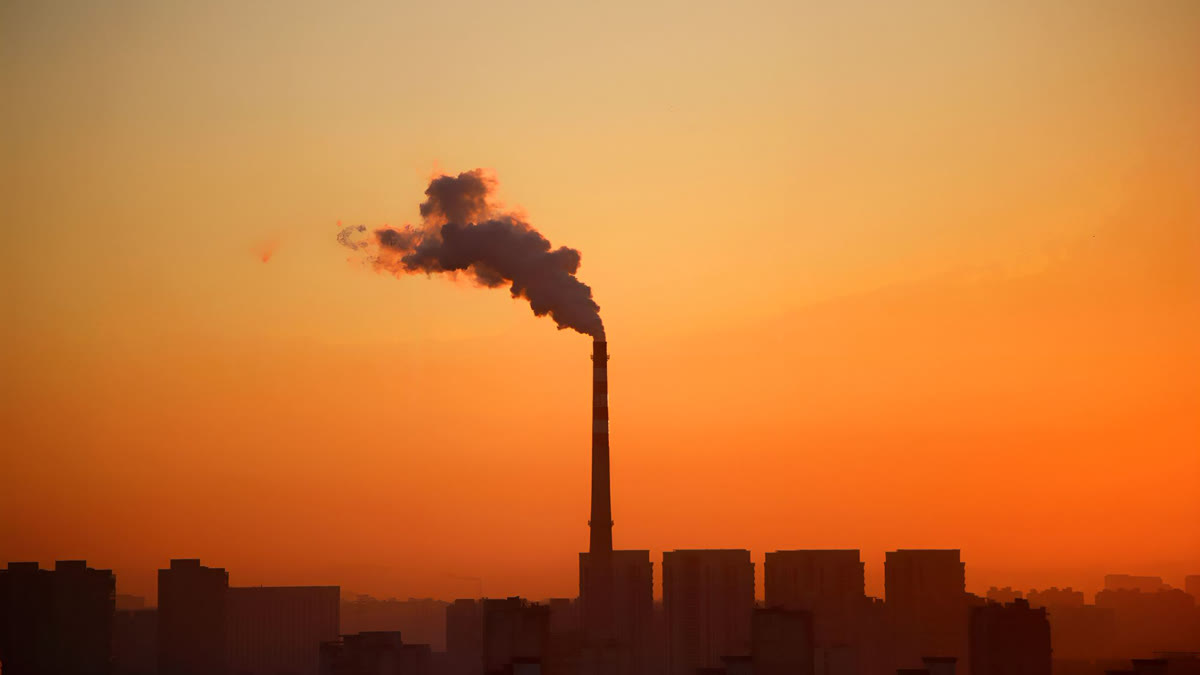
Energy, transport, industry and buildings that burn coal, oil or gas release carbon dioxide. This is the largest human-caused source in global assessments, because fossil fuels have powered most modern energy systems.
Industry and cement
Industrial processes release greenhouse gases directly, and cement production releases carbon dioxide as limestone is heated.
Agriculture and land use: including deforestation
Farming releases methane and nitrous oxide. Clearing forests removes trees that would otherwise store carbon, and the cleared land is often used for farming or development, so land-use change both releases stored carbon and reduces future storage.
Transport and buildings
Vehicles, shipping, aviation and the energy used to heat, cool and light buildings add carbon dioxide and other greenhouse gases.
The health sector’s own emissions
The health sector itself is a significant contributor to carbon dioxide emissions, according to the WHO compendium on climate change and health, a point health systems themselves are working to address.
How each cause reaches our health
| Cause | Pathway | Population-level health effect (WHO fact sheet) |
|---|---|---|
| Burning fossil fuels | Heat, air pollution | Heat stress; air quality worsens as temperatures rise |
| Land-use change, deforestation | Food and water systems | Food and water insecurity as rainfall and temperature patterns shift |
| Agriculture, waste | Water and food-borne routes | Changing patterns of water- and food-borne disease at population level |
| All causes together | Extreme weather, displacement | Floods, storms, droughts and displacement, with health effects on affected populations |
These are population-level pathways from the WHO climate and health fact sheet. Disease-outcome detail is outside this article’s scope.
Who is affected first and worst
The effects are uneven. WHO reports that 3.6 billion people live in areas highly susceptible to climate change, and that low-income countries and small island developing states endure the harshest impacts despite contributing minimally to emissions. Climate change is expected to cause about 250,000 additional deaths per year between 2030 and 2050 from undernutrition, malaria, diarrhoea and heat stress, with direct health damage costs of US$2–4 billion per year by 2030 (WHO fact sheet).
What would slow it down
WHO’s response, in plain words: cut emissions while improving health, cleaner energy, transport and food systems that also improve health; climate-resilient health systems that keep working through extreme weather; and holding warming to the 1.5°C goal. These are population-level actions, not personal advice.
How climate change affects health systems
Climate change does not only make people ill; it damages the systems that treat them. WHO’s climate and health fact sheet (published 12 October 2023) calls climate change “a threat multiplier, undermining and potentially reversing decades of health progress”: it affects “the functioning of health systems”, impacts “our health workforce and infrastructure, reducing capacity to provide universal health coverage (UHC)”, and hits hardest where systems are weakest — “areas with weak health infrastructure — mostly in developing countries — will be the least able to cope without assistance”. Heat strains hospitals and overwhelms them during heatwaves; floods close clinics and cut supply chains; droughts and storms displace the people the system serves. WHO’s response objective follows directly: “Build better, more climate-resilient and environmentally sustainable health systems” — systems that keep working through extreme weather, rather than systems that fail at the moment they are needed most.
What are heat-health action plans?
Heat-health action plans (HHAPs) are, in WHO/Europe’s words (news item, 2 June 2026), “structured public health plans that bring together a portfolio of actions and actors across preparedness, warning and response to reduce heat-related health risks through coordinated implementation across different sectors and levels of governance.” The updated guidance — the second edition, launched in June 2026 — presents an HHAP framework across eight core elements, covering planning, coordination, delivery and improvement; the first edition was published in 2008. WHO member states committed to developing, updating and implementing HHAPs in the 2023 Budapest Declaration on Environment and Health. Many countries already have plans that have substantially reduced heat-related health burden; several still have none, leaving their people and health systems at risk — which is why the guidance exists both for countries building a plan for the first time and for those reviewing and strengthening one they already have.
How drought affects girls’ health and safety
Drought and flooding can lengthen the distance women and girls must walk to collect water. That extra burden means missed school and greater exposure to physical and sexual violence, according to a WHO and PMNCH background document prepared for COP27. It is one of the ways climate change reaches health through everyday, practical pressures rather than through a single extreme event.
How much adaptation finance do developing countries need?
UNEP’s 2026 Adaptation Gap Report, released on 4 November 2026, estimates that developing countries need around US$305 billion a year by 2035 to adapt to climate change. International public adaptation finance from developed to developing countries reached US$28.2–31.7 billion in 2024, about US$1 billion more than in 2023. Even if the COP30 call to at least triple adaptation finance by 2035 is met, UNEP estimates it would cover only 20–29% of what is needed.
Do countries’ climate plans mention health?
A WHO review of the latest nationally determined contributions (NDCs) — published on 19 October 2026 and covering 114 NDC documents from 140 Parties — found that 91% mention health. More than half (59%) identify health co-benefits, 55% include health-specific adaptation actions or targets, 11% include measures to cut emissions from the health sector, and 23% estimate the resources needed for health-related adaptation. Health is now a routine part of climate planning, even though most plans still do not cost what health adaptation would take.
How does climate change affect sexual and reproductive health?
WHO’s page on climate change and sexual and reproductive health and rights links climate change to adverse maternal and perinatal outcomes, reduced contraceptive use and increased gender-based violence. Heat, displacement and disrupted services are among the pathways through which a changing climate reaches reproductive health.
How many additional heat deaths could the current El Niño cause?
Model-based estimates from the Climate Impact Lab put the additional heat deaths from the current El Niño at about 857,000 between June 2026 and March 2027, with about 373,000 of those projected for October 2026 to March 2027. The largest numbers are projected in Nigeria (about 56,000), India (about 55,000, most in March), Indonesia (about 29,000) and Brazil (about 19,000). The estimates compare projected heat mortality with a 1996–2005 baseline and are updated monthly; they are projections, not counted deaths. The World Meteorological Organization has said there is a high chance this El Niño is the strongest recorded since 1950 and that it is expected to persist into March–May 2027.
What is the TAFF Mutirão roadmap for phasing out fossil fuels?
At the closing plenary of COP30 in Belém, the COP30 Presidency published a roadmap for the transition away from fossil fuels. It is voluntary and non-prescriptive — it was not negotiated by Parties — and it proposes a “Belém Readiness Approach” built on three pillars: energy demand, energy supply and the broader economy. Alongside it, the Presidency launched TAFF Mutirão — TAFF stands for Transition Away From Fossil Fuels — a collective agenda to accelerate coordinated action through 2033, and proposed sustaining the dialogue through future COP Presidencies and the Global Stocktake. The roadmap drew on 267 contributions to an open call, 21 of them from Parties or groups of Parties representing 115 Parties.
Does India have a national target to cut air pollution?
India’s National Clean Air Programme (NCAP), launched by the Ministry of Environment, Forest and Climate Change in January 2019, aims to cut particulate matter by 40% by 2025–26 compared with 2017 levels. The Central Pollution Control Board (CPCB) implements the programme in non-attainment cities — cities that have not met the national ambient air quality standards. CPCB reported in June 2024 that PM10 concentrations had fallen in 96 of 131 non-attainment cities in 2023–24 compared with 2017–18, and that 17 cities were meeting the national ambient air quality standard for PM10. Government statements in 2025 describe the programme as covering 130 cities — non-attainment cities plus Million Plus cities — in 24 states and union territories; the two counts cover different city sets, so they are not directly comparable. Progress is tracked through the PRANA portal, and Rs. 13,036.52 crore had been released to the programme by 2025, of which Rs. 9,209.44 crore (71%) had been utilised.
How is El Niño affecting health and water supplies in the Pacific?
An outlook issued on 23 October 2026 by the World Meteorological Organization’s Pacific Regional Climate Centre Network, after the 19th Pacific Islands Climate Outlook Forum (PICOF-19) in Port Moresby, expects below-normal rainfall from November 2026 to January 2027 across a broad band from Palau to the Marshall Islands and from central and southern Papua New Guinea to southern French Polynesia, with wetter conditions along the equator from Nauru to eastern Kiribati. Papua New Guinea, Solomon Islands, Vanuatu, Fiji and Tonga had already reported water shortages between May and October 2026. The same outlook notes more than 57 deaths in disasters at sea in Solomon Islands, Vanuatu and Fiji, dengue outbreaks reported in several western Pacific countries, and more respiratory and gastrointestinal infections in Vanuatu. WMO says there is a high chance this El Niño is the strongest recorded since 1950 and that it is expected to persist into March–May 2027.
Frequently asked questions
Is climate change already affecting health?
Yes, heatwaves, floods, and food and water stress are already increasing, according to WHO.
Do natural factors still matter?
Yes. Volcanic activity, changes in the Sun’s output and Earth’s orbit affect climate over long timescales. But models with only natural factors do not match the observed long-term warming; models that include human-caused greenhouse gases do.
Is this article about personal actions?
No. It explains global causes only, following the scientific consensus, with no personal advice.