
Guide hub
Environment and daily life — air, sun, water, food, being prepared, and travel
Air, sun, water, food safety, being prepared, and staying healthy when you travel — the everyday side of public health.
Published 6 November 2026 · Last reviewed 7 November 2026 · Next review 7 May 2027
Direct answer: This hub is the everyday companion: what today’s air and sun numbers mean, how clean water and food safety work as systems, and how to be prepared — with official scale guidance only, no personal verdicts, no medical advice. Travel health joins it here: the airport guides, the checks before you fly, and what to watch after you land.

Chapter 1
Environment and daily life: today’s air — what the Air Quality Index means
The Air Quality Index (AQI) turns measurements of five common pollutants — ground-level ozone, particle pollution (PM2.5 and PM10), carbon monoxide, sulfur dioxide and nitrogen dioxide — into one number on a scale of 0 to 500, in six colour-coded bands from Good to Hazardous.
Above the WHO guideline limits
Almost the whole world population breathes air above WHO guideline limits. Read the full guide: Air quality index, explained. Check a published reading with the Air Quality Index Lookup. For reading an AQI from another country — the US, China and Vietnam scales side by side — see Reading air quality in another country.
Chapter 2
Today’s sun — the UV Index scale
The Global Solar UV Index runs from 0 upward: 0–2 Low, 3–5 Moderate, 6–7 High, 8–10 Very High, 11+ Extreme.
What changes the index
It depends on sun elevation, latitude, cloud cover, altitude, ozone and ground reflection.
The official protection messages
The official WHO protection messages are shade during midday hours, a shirt, sunscreen, a hat and sunglasses. Read the full guide: UV index scale, explained. Check a published index with the UV Index Lookup.
Chapter 3
Clean water, sanitation and hygiene
Water, sanitation and hygiene — WASH — are systems: safely managed drinking water, safely managed sanitation, and hygiene services at home.
The gaps, in numbers
The WHO/UNICEF Joint Monitoring Programme is the custodian of the global estimates, and its 2025 report puts the gaps at 2.1 billion people without safely managed drinking water and 3.4 billion without safely managed sanitation.
Handwashing: 20 seconds
Handwashing with soap and water for at least 20 seconds is the CDC’s stated scrubbing time. Read the full guide: What is WASH? Water, sanitation, hygiene. Try the Water, Sanitation and Hygiene Tool.
Chapter 4
Five Keys to Safer Food
WHO’s Five Keys to Safer Food are: keep clean; separate raw and cooked; cook thoroughly; keep food at safe temperatures; use safe water and raw materials.
One in ten
WHO notes that 1 in 10 people fall ill from unsafe food each year. Review the keys with the Five Keys to Safer Food Checklist.
Chapter 5
Be prepared
Ready.gov’s basic disaster supplies kit starts with water — one gallon per person per day for several days — and a several-day supply of non-perishable food, plus a radio, flashlight, first aid kit and the other items on the list.
Work out your quantities
Work out general planning quantities with the Emergency Preparedness Checklist. No medication module is included, and no personal medical preparation advice is given.
Chapter 6
Airports and travel health — the world's 50 busiest airports
The world's 50 busiest airports in 2024 sit in 24 countries and territories, not 50 countries.
The directory and the rules
The directory carries the ranking — ranks 1–20 verified against ACI, ranks 21–50 DRAFT — and it is the only page on this site that carries the passenger figures. How airports protect traveller health explains the International Health Regulations points-of-entry rules and CAPSCA in plain language, with no per-airport rating, because no public per-airport rating exists.
Before, during and after flying
The traveller guides are Before you fly: health checks, At the airport and on the plane and After you land: symptoms to watch.
By region
The region pages are North America (17 airports), East Asia (14), South and Southeast Asia (7), Europe (8) and the Middle East and Latin America (4).
Directory
All guides and tools in this hub
Every guide and tool in this hub, in one filterable list.
Airport health: South and Southeast Asia
Airport health awareness for South and Southeast Asia: the 7 busiest airports in India, Singapore, Thailand, Malaysia, Indonesia and the Philippines.
Published 6 November 2026 · Last reviewed 7 November 2026 · Next review 7 May 2027
Airport health: North America
Airport health awareness for North America: the 17 busiest airports in the United States, Canada and Mexico, the IHR framework, and where to check.
Published 6 November 2026 · Last reviewed 7 November 2026 · Next review 7 May 2027
Airport health: Middle East and LatAm
Airport health awareness for the Middle East and Latin America: the 4 busiest airports in the UAE, Qatar, Saudi Arabia and Colombia.
Published 6 November 2026 · Last reviewed 7 November 2026 · Next review 7 May 2027
Airport health: Europe
Airport health awareness for Europe: the 8 busiest airports in Spain, the UK, France, the Netherlands, Germany, Italy and Turkey, and where to check.
Published 6 November 2026 · Last reviewed 7 November 2026 · Next review 7 May 2027
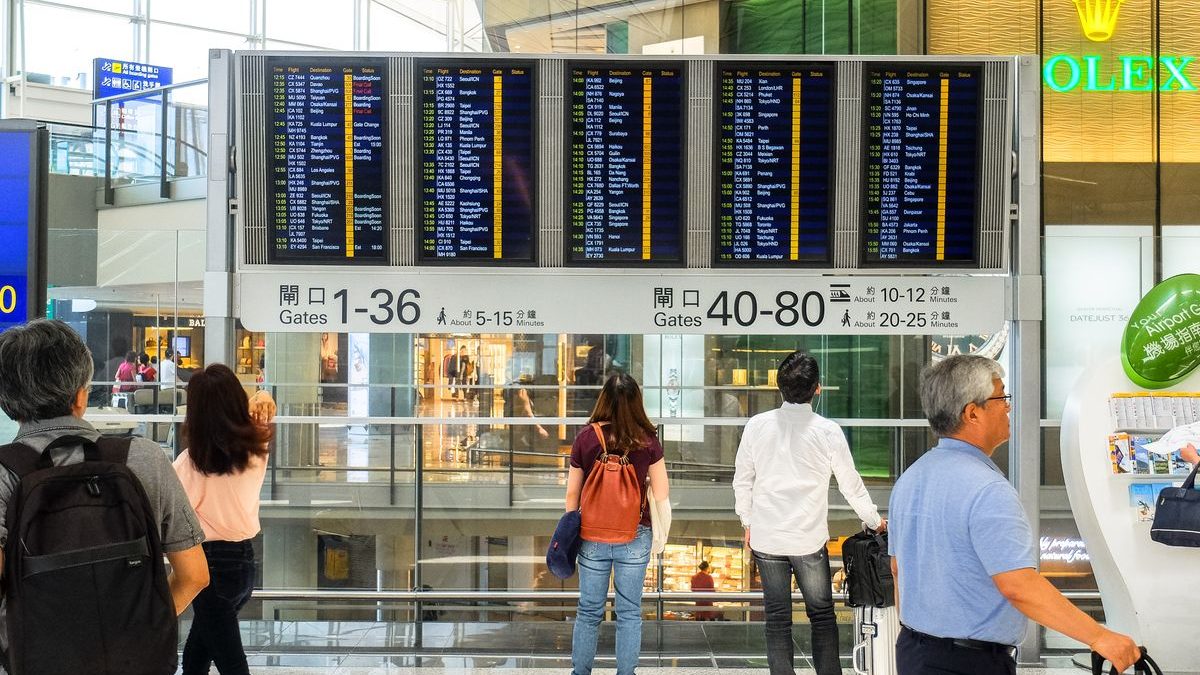
Airport health: East Asia
Airport health awareness for East Asia: the 14 busiest airports in China, Japan, South Korea and Hong Kong, the IHR framework, and where to check.
Published 6 November 2026 · Last reviewed 7 November 2026 · Next review 7 May 2027

Five Keys to Safer Food Checklist
Tick each of the WHO Five Keys to Safer Food.

Emergency Preparedness Checklist
Enter household size and days of supply to see general Ready.gov planning quantities for water and food.
World's 50 busiest airports
The world's 50 busiest airports in 2024, ranked by total passengers: the health awareness directory for the 50 airports in 24 countries and territories.
Published 6 November 2026 · Last reviewed 7 November 2026 · Next review 7 May 2027
How airports protect traveller health
The International Health Regulations and CAPSCA, explained in plain language: what countries must do at airports, and what that means for travellers.
Published 6 November 2026 · Last reviewed 7 November 2026 · Next review 7 May 2027
Before you fly: health checks
Before you fly: the health checks for air travellers — documents, insurance, medicines, health declarations and where to verify entry rules.
Published 6 November 2026 · Last reviewed 7 November 2026 · Next review 7 May 2027
At the airport and on the plane
Staying healthy in transit: hand hygiene, what screening is, reporting illness at the airport, and the fit-to-fly questions travellers ask.
Published 6 November 2026 · Last reviewed 7 November 2026 · Next review 7 May 2027

After you land: symptoms to watch
After you land: the symptoms to watch in the weeks after travel, what to do, and why telling a clinician about travel history matters.
Published 6 November 2026 · Last reviewed 7 November 2026 · Next review 7 May 2027
Travel vaccinations: what to check
Travel vaccines in three layers: routine first, destination-recommended second, legally required third — plus Hajj and Umrah rules for the 2026 pilgrimage year, and where to check.
Published 6 November 2026 · Last reviewed 7 November 2026 · Next review 7 May 2027
What is WASH? Water, sanitation, hygiene
What is WASH? Water, sanitation and hygiene, explained in plain language — the JMP ladder, the global gaps, and why clean water is a health system issue.
Published 6 November 2026 · Last reviewed 7 November 2026 · Next review 7 May 2027
More hubs
Explore other themes
Sources
Sources
Questions
Frequently asked questions
Does this hub say whether the air is safe for me?
No. The tools show published readings only — no personal verdict and no personal advice.
Does the UV tool tell me how long I can stay in the sun?
No. It shows the published index and the official WHO scale messages only — no skin-type times.
How often is this hub reviewed?
Every six months, or sooner when a cited source publishes a new edition.