
On this page
- Two conditions, one organ system
- Asthma: the numbers
- Asthma: symptoms, triggers and what raises the risk
- Symptoms
- Triggers
- What raises the risk
- Treatment
- COPD: the numbers
- COPD: causes, and the air people breathe
- Smoking and air pollution
- Household air pollution
- What improves symptoms
- What this page is, and when it goes out of date
- Frequently asked questions
Key points
- Asthma affected an estimated 363 million people in 2023 and caused 442,000 deaths, and it is the most common chronic disease among children (WHO fact sheet, published 28 April 2026).
- COPD is the third leading cause of death worldwide, causing 3.4 million deaths in 2023, approximately 6% of all global deaths (WHO fact sheet, published 10 June 2026).
- Nearly 90% of COPD deaths in those under 70 occur in low- and middle-income countries, and about 392 million people live with COPD (a 2019-based estimate published by WHO in 2023), three quarters of them in low- and middle-income countries (WHO).
- Tobacco smoking accounts for over 70% of COPD cases in high-income countries; in low- and middle-income countries it accounts for 30–40% of cases, and household air pollution is a major risk factor (WHO).
- Asthma cannot be cured, but inhaled medication can control its symptoms; COPD cannot be cured either, but its symptoms can improve by avoiding smoking and air pollution (WHO).
Direct answer: Asthma and COPD are the two most common chronic respiratory diseases. Asthma affected an estimated 363 million people in 2023 and caused 442,000 deaths, and it is the most common chronic disease among children (WHO asthma fact sheet, published 28 April 2026). COPD — chronic obstructive pulmonary disease — is the third leading cause of death worldwide, causing 3.4 million deaths in 2023, approximately 6% of all global deaths (WHO COPD fact sheet, published 10 June 2026). Neither can be cured, but both can be managed, and both are shaped by the air people breathe. It does not diagnose, treat, or advise any individual.
Two conditions, one organ system
Asthma and COPD both affect the lungs and the airways, and both make breathing harder — but they are different diseases. Asthma is caused by inflammation and muscle tightening around the airways, which makes it harder to breathe, and its symptoms come and go. COPD is a common lung disease causing restricted airflow and breathing problems, and it is sometimes called emphysema or chronic bronchitis (WHO). Its airflow limitation persists rather than coming and going.
The pairing on one page is deliberate: the two conditions share risk factors (tobacco smoke, air pollution), they share a place in WHO’s work (both sit in the WHO Global Action Plan for the Prevention and Control of NCDs and the UN 2030 Agenda for Sustainable Development), and a reader looking up one will often need the other explained. But they are not the same disease, they do not affect the same age groups in the same way, and this page keeps their figures strictly separate throughout.
Asthma: the numbers
Asthma affected an estimated 363 million people in 2023 and caused 442,000 deaths (WHO fact sheet, published 28 April 2026). Asthma is a major noncommunicable disease affecting both children and adults, and it is the most common chronic disease among children.
Most asthma-related deaths occur in low- and lower-middle-income countries, where under-diagnosis and under-treatment is a challenge (WHO). That gap shows up in access to the most basic care: in 2023, potentially life-saving bronchodilators were available in public primary health care facilities in less than two thirds of low- and low-middle-income countries, and steroid inhalers were available in less than half. Asthma is often under-diagnosed and under-treated, particularly in low- and middle-income countries — and the consequence is not only deaths. People with under-treated asthma can suffer sleep disturbance, tiredness during the day and poor concentration, and families may miss school and work, with financial impact on the family and the wider community.
Asthma: symptoms, triggers and what raises the risk
Symptoms
Inflammation and narrowing of the small airways in the lungs cause asthma symptoms, which can be any combination of cough, wheeze, shortness of breath and chest tightness (WHO). Symptoms can be mild or severe and can come and go over time. They are often worse at night or during exercise, and sometimes get significantly worse — known as an asthma attack. Some people have worse symptoms when they have a cold or during changes in the weather.
Triggers
Triggers WHO names include dust, smoke, fumes, grass and tree pollen, animal fur and feathers, and strong soaps and perfume. Avoiding triggers can help reduce symptoms, though triggers differ from person to person and avoiding them does not remove the condition. Symptoms can also be caused by other conditions, which is why WHO’s fact sheet says plainly that people with symptoms should talk to a healthcare provider — this page repeats that, and does not help a reader judge their own symptoms.
What raises the risk
Many factors have been linked to an increased risk of developing asthma, although it is often difficult to find a single, direct cause (WHO). Asthma is more likely if other family members also have asthma, particularly a close relative such as a parent or sibling, and more likely in people who have other allergic conditions such as eczema and hay fever. Urbanisation is associated with increased asthma prevalence. Events in early life affect the developing lungs and can increase the risk — including low birth weight, prematurity, exposure to tobacco smoke and other sources of air pollution, and viral respiratory infections. Children and adults who are overweight or obese are at greater risk of asthma.
Treatment
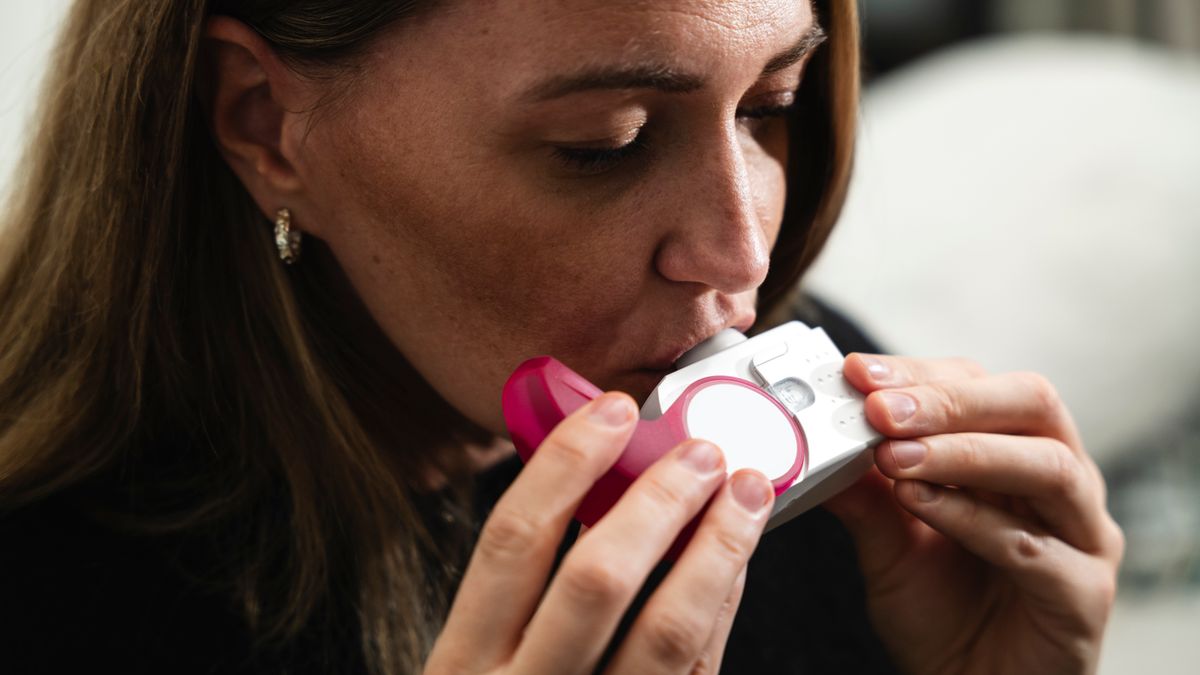
Asthma cannot be cured, but there are treatments available, and the most common treatment is an inhaler, which delivers medication directly to the lungs (WHO). Inhaled medication can control asthma symptoms and allow people with asthma to lead a normal, active life. This page names inhalers only as the category of care WHO describes; it does not describe types, doses, technique or when to use them — that is a matter for the health professional who prescribes them, and for the action plan a healthcare provider may give.
COPD: the numbers
Chronic obstructive pulmonary disease (COPD) is the third leading cause of death worldwide, causing 3.4 million deaths in 2023, approximately 6% of all global deaths (WHO fact sheet, published 10 June 2026). It is the seventh leading cause of poor health worldwide, measured by disability-adjusted life years. Nearly 90% of COPD deaths in those under 70 years of age occur in low- and middle-income countries.
There are an estimated 392 million people living with COPD (a 2019-based estimate published by WHO in 2023), and three quarters of them live in low- and middle-income countries (WHO, 2023). Readers who have seen an older figure — that COPD was the fourth leading cause of death, with 3.5 million deaths in 2021 — should note that the WHO fact sheet was updated in June 2026: the current figures are third leading cause and 3.4 million deaths in 2023. This page uses the current figures, and says so, so that the older numbers are not repeated as if they were still the latest.
COPD: causes, and the air people breathe
Smoking and air pollution
Smoking and air pollution are the most common causes of COPD (WHO). Tobacco smoking accounts for over 70% of COPD cases in high-income countries. In low- and middle-income countries, tobacco smoking accounts for 30–40% of COPD cases, and household air pollution is a major risk factor.
Household air pollution
Household air pollution is the part of that sentence most readers in high-income countries will not have met. In homes where cooking and heating use solid fuels such as wood, charcoal, coal or kerosene, the smoke stays inside, and the people who spend most time near the stove — most often women and young children — breathe it daily. WHO’s household air pollution fact sheet records that exposure leads to noncommunicable diseases including stroke, ischaemic heart disease, COPD and lung cancer, and that about 23% of all deaths from COPD in adults in low- and middle-income countries are due to exposure to household air pollution. Outdoor air pollution matters too, and the air quality guide and Air Quality Index Lookup tool on this site cover it — but for COPD, the indoor air of the home is the larger and less visible risk.
What improves symptoms
COPD is not curable, but symptoms can improve if one avoids smoking and exposure to air pollution and gets vaccines to prevent infections (WHO). That sentence is the whole of the management message this page gives. As with asthma, the detail of care — what helps, what is prescribed, and what to do when symptoms worsen — belongs to a health professional, not to an awareness page.
What this page is, and when it goes out of date
This page is awareness-only: it explains what asthma and COPD are, using WHO’s asthma fact sheet published 28 April 2026, its COPD fact sheet published 10 June 2026, and its household air pollution fact sheet. It does not diagnose, treat, or advise any individual, and it does not describe any medicine, dose, inhaler technique, or course of care. Its figures are for 2023, the latest year in the WHO fact sheets at the time of writing (8 November 2026) — except for the COPD prevalence figure: the estimated 392 million people living with COPD is a 2019-based estimate published by WHO in 2023. WHO updates the fact sheets when new global estimates are published — the COPD sheet was itself updated in June 2026, changing its ranking and death toll from the 2021 figures — so the figures here will go out of date when the next editions appear. The linked WHO fact sheets are the place to check for the newest numbers.
Frequently asked questions
What is asthma?
A chronic lung disease in which inflammation and narrowing of the small airways cause cough, wheeze, shortness of breath and chest tightness. It affected an estimated 363 million people in 2023 (WHO).
What is COPD?
Chronic obstructive pulmonary disease: a common lung disease causing restricted airflow and breathing problems, sometimes called emphysema or chronic bronchitis. It caused 3.4 million deaths in 2023 (WHO).
What causes COPD?
Smoking and air pollution are the most common causes (WHO). Tobacco smoking accounts for over 70% of cases in high-income countries; in low- and middle-income countries, household air pollution is a major risk factor.
Can asthma or COPD be cured?
No — neither can be cured, according to WHO. Asthma symptoms can be controlled with inhaled medication, and COPD symptoms can improve by avoiding smoking and air pollution. Care is a matter for a health professional.