
On this page
- A huge animal outbreak, rare human cases
- What the risk assessment says
- Why it is watched so closely
- What H5N1 is
- How people catch it, and what illness looks like
- How people catch it
- What illness looks like
- Dairy cattle: what changed in 2024
- Food, treatment and what is being prepared
- Food
- Treatment
- What is being prepared
- What to do
- Frequently asked questions
Key points
- H5N1 is widespread in animals, now detected on all seven continents, but human cases are rare and almost always follow close contact with animals.
- Since 2003 there have been 1,003 laboratory-confirmed human H5N1 cases and 479 deaths in 25 countries to 6 September 2026; 10 cases and 2 deaths in 2026.
- The joint FAO/WHO/WOAH assessment of 18 May 2026 rates the global public-health risk as LOW for the general public, low-to-moderate for occupationally exposed people.
- There is no sustained human-to-human transmission. H5N1 is not a human pandemic.
- In 2024 H5N1 spread to dairy cattle in the United States, and some dairy farm workers who had direct contact with infected cows were also infected (WHO).
Direct answer: Bird flu (H5N1) is a serious animal outbreak that has now reached all seven continents, but the risk to people is low: human cases are rare, almost always follow close contact with infected animals, and there is no sustained human-to-human transmission. The joint FAO/WHO/WOAH assessment of 18 May 2026 rates the global public-health risk as low for the general public. H5N1 is not a human pandemic.
A huge animal outbreak, rare human cases
The distinction that matters most about H5N1 is between animals and people. In animals, highly pathogenic avian influenza A(H5) is now extraordinarily widespread: it has been detected on all seven continents, including the first detection in Australia in June 2026 and on Macquarie Island in October 2026, and it infects wild birds, poultry and a growing list of mammals. In people, the picture is very different. From 2003 to 6 September 2026 there were 1,003 laboratory-confirmed human H5N1 cases and 479 deaths in 25 countries, 10 of those cases and 2 deaths in 2026. Cambodia was the 2026 hotspot, with 6 human cases and 1 death. In the United States, the CDC counted 72 human H5 cases since February 2024 as of 15 October 2026.
What the risk assessment says
The joint assessment by the Food and Agriculture Organization, WHO and the World Organisation for Animal Health, published 18 May 2026 with data to 1 March 2026, is the authoritative statement of risk. It rates the global public-health risk as low for the general public, and low-to-moderate for people occupationally exposed to infected animals, poultry and dairy workers, for example. It found no sustained human-to-human transmission. The high case-fatality figure sometimes quoted, 479 deaths out of 1,003 reported cases, about 48%, describes only laboratory-confirmed cases, which are the severe ones that reach testing; it is not the risk to an average person, which is what the “low” rating measures.
Why it is watched so closely
If the risk is low, the attention is still justified, and this page says why plainly: influenza viruses change, and a virus that spreads easily between birds and mammals is watched for any change in how it behaves in people. That is the reason for the joint assessments, the animal surveillance, and the case reporting, not because a human pandemic is happening. The correct frame is vigilance without alarm: a low current risk, a real animal epidemic, and a monitoring system designed to catch change early.
What H5N1 is
H5N1 is a subtype of influenza A, the type of flu virus that can cause pandemics. Wild aquatic birds are the natural reservoir for most influenza A subtypes, which is why the virus cannot be wiped out in nature (WHO, avian influenza fact sheet). Human infections with the current lineage were first reported in 1997, during a poultry outbreak in Hong Kong. Since 2003 the virus has spread in bird populations from Asia to Europe and Africa, reaching the Americas in 2021, and has caused hundreds of millions of poultry infections. It has also spread to some mammals, including marine mammals, dairy cattle and other wild and domestic animals (WHO).
How people catch it, and what illness looks like
How people catch it
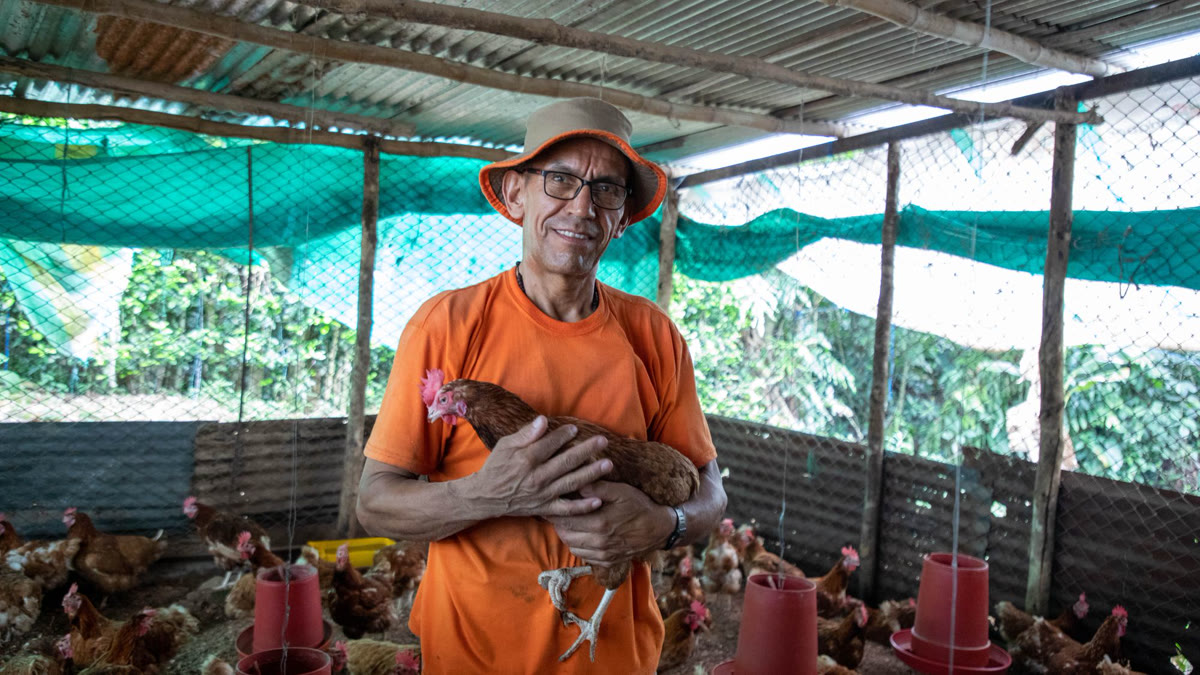
Human infection follows contact with animals, not contact with other people. The primary risk is direct or indirect contact with infected animals or contaminated environments, including live bird markets, handling carcasses of infected poultry, preparing infected poultry for consumption in household settings, and work such as culling (WHO).
What illness looks like
In people, illness ranges from mild flu-like symptoms or eye inflammation to severe acute respiratory disease and death, and some infections cause no symptoms at all. The reported case fatality rate for A(H5) infection to date has been higher than that of seasonal influenza, but that rate describes reported cases, which are the severe ones that reach testing (WHO).
Dairy cattle: what changed in 2024
In 2024, H5N1 spread to dairy cattle in the United States, and some dairy farm workers who had direct contact with infected cows were also infected (WHO). The CDC reported the multi-state outbreak in dairy cows from 25 March 2024, and counted 72 human H5 cases in the United States since February 2024 as of 15 October 2026. That United States count sits inside the global total in the first section of this page, it is not additional to it. CDC surveillance as of 2 October 2026 showed no indicators of unusual flu activity in people, including A(H5N1) bird flu (CDC).
Food, treatment and what is being prepared
Food
There is no evidence that A(H5) viruses can be transmitted to humans through properly prepared and cooked poultry or eggs (WHO). WHO’s prevention advice is to handle, store and cook eggs, meat and other animal products properly, to keep surfaces clean, to wash hands, and to slaughter only healthy animals for consumption.
Treatment
If a person is suspected of having zoonotic influenza, health authorities should be notified and clinical management provided, including testing, triage and treatment with antivirals and supportive care (WHO).
What is being prepared
On the preparedness side, WHO monitors avian and other zoonotic influenza viruses continuously through its Global Influenza Surveillance and Response System, works with FAO and WOAH on surveillance at the human-animal interface, and twice a year reviews whether additional candidate vaccine viruses are needed for pandemic preparedness (WHO).
What to do
The precautions are simple and animal-focused: avoid contact with sick or dead birds and poultry and their droppings; do not handle wild birds; wash hands after animal contact; and report sick or dead birds to local animal-health authorities. People who work with poultry or dairy animals should follow their employer’s and local authority’s guidance. This page gives awareness information only and does not advise any individual.
Frequently asked questions
Is bird flu a pandemic?
No. H5N1 is a major animal outbreak with rare, sporadic human cases. There is no sustained human-to-human transmission, and the joint FAO/WHO/WOAH assessment rates the risk to the general public as low.
How many people have caught H5N1?
1,003 laboratory-confirmed human cases and 479 deaths in 25 countries since 2003, to 6 September 2026, 10 cases and 2 deaths in 2026.
What should I do if I find a sick or dead bird?
Do not touch it. Avoid contact with sick or dead birds and their droppings, wash hands after any animal contact, and report sick or dead birds to local animal-health authorities.
Can I catch bird flu from food?
There is no evidence that A(H5) viruses can be transmitted to humans through properly prepared and cooked poultry or eggs (WHO). Handle, store and cook eggs, meat and other animal products properly, and wash hands.
Is there treatment for bird flu in people?
Suspected cases are managed with testing, triage and treatment with antivirals and supportive care, and health authorities should be notified (WHO). This page gives awareness information only and does not advise any individual.