
Key points
- Body mass index (BMI) is weight in kilograms divided by height in metres squared. It is a screening measure, not a diagnosis.
- For adults 20 and older, the bands are the same for everyone: underweight below 18.5, healthy weight 18.5 to 24.9, overweight 25.0 to 29.9, and obesity 30.0 and above.
- BMI does not measure body fat directly. It does not tell fat from muscle or bone, and it does not say where fat is carried.
- For children and teenagers, BMI is read against growth references for their age and sex, not the adult bands.
- Waist circumference is a second measure WHO names. BMI alone can miss risk carried around the waist.
Direct answer: Body mass index (BMI) is weight in kilograms divided by height in metres squared. It is a screening measure of weight relative to height, not a direct measure of body fat. For adults 20 and older, the bands are underweight below 18.5, healthy weight 18.5 to 24.9, overweight 25.0 to 29.9, and obesity 30.0 and above. BMI does not tell fat from muscle, and it does not say where fat is carried. This page is general information only. It does not assess any person.
What BMI is
BMI is a calculated measure of a person’s body weight relative to height. The CDC defines it as weight in kilograms divided by the square of height in metres. In imperial units the same number comes from 703 times weight in pounds divided by height in inches squared.
The formula is quick, low cost and noninvasive, which is why clinics and health agencies use it so widely. The CDC notes that BMI does not directly measure body fat, but it is moderately to strongly associated with other measures that capture the amount, location and distribution of body fat. A laboratory scan can measure body composition precisely, but it is expensive and not widely available. BMI is the simple measure used instead.
The adult categories
The CDC groups adult BMIs into four categories, and splits obesity into three classes. The bands apply to adults 20 and older, and they are the same regardless of age, sex or race.
| BMI | Category |
|---|---|
| Below 18.5 | Underweight |
| 18.5 to 24.9 | Healthy weight |
| 25.0 to 29.9 | Overweight |
| 30.0 to 34.9 | Obesity, class 1 |
| 35.0 to 39.9 | Obesity, class 2 |
| 40.0 and above | Obesity, class 3 |
WHO uses the same two headline cut-offs for adults: overweight is a BMI of 25 or higher, and obesity is a BMI of 30 or higher. The underweight cut-off, below 18.5, is the same in both systems. A BMI of exactly 25.0 sits in the overweight band, and a BMI of exactly 30.0 sits in the obesity band, because each band starts at its lower number.
What BMI does not measure
BMI does not distinguish between fat, muscle and bone mass. All three influence a person’s weight. That is the CDC’s own caution, and it is the main limit of the number.
A very muscular person can record a high BMI without carrying much body fat. A person with little muscle can record a BMI in the healthy weight band while carrying fat around the waist. BMI also does not indicate what types of fat people have, or where in the body they carry fat. BMI cannot show where fat is carried, and that is why WHO names waist circumference as another measure alongside BMI.
For one person, the CDC says BMI should be considered with other factors: medical history, health behaviours, physical examination findings and laboratory findings such as glucose and cholesterol.
BMI in children and teenagers
Children and teenagers do not use the adult bands. Their BMI is read against growth references for their age and sex, because a healthy BMI changes as a child grows.
WHO defines overweight in children aged 5 to 19 as a BMI-for-age more than one standard deviation above the WHO Growth Reference median, and obesity as more than two. For children under 5, WHO uses weight-for-height: more than two standard deviations above the WHO Child Growth Standards median is overweight, and more than three is obesity. The CDC uses BMI-for-age percentiles for ages 2 to 19, and the American Academy of Pediatrics recommends annual BMI assessment from age 2. This site’s calculator is for adults only.
Waist circumference as a second measure
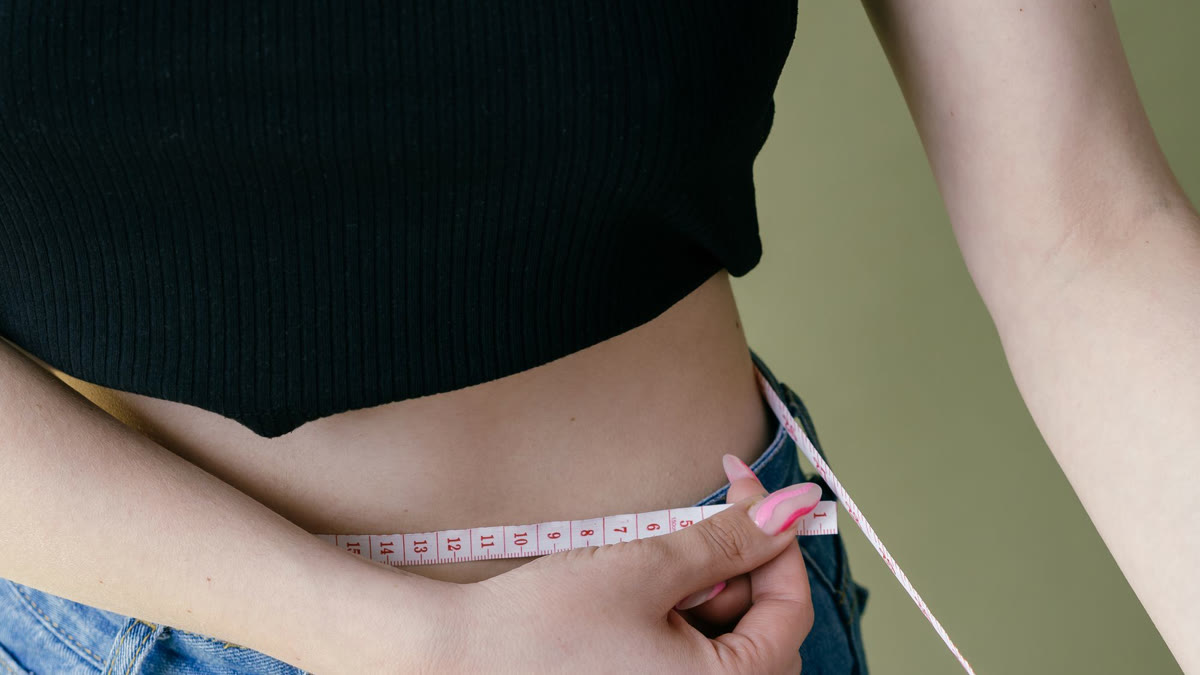
WHO names waist circumference as another measure that can be used alongside BMI. It is measured with a tape around the waist, and it reflects where fat is carried, which BMI cannot show.
A person can have a BMI in the healthy weight band and still carry fat around the waist, and a person can have a BMI above 25 while carrying most of their weight as muscle. The two measures answer different questions: BMI compares weight with height, and waist circumference shows where fat sits. Neither one diagnoses anything on its own.
BMI around the world
In 2024, 1 in 7 people in the world, 1.1 billion people, were living with obesity. In the same year, 45% of adults aged 18 and over, 2.6 billion people, were overweight, including 940 million living with obesity, 16% of all adults. The same year, 35 million children under 5 were overweight, and 400 million children and adolescents aged 5 to 19 were overweight, including 170 million with obesity.
In 2023, higher-than-optimal BMI caused an estimated 3.7 million deaths, from cardiovascular diseases, diabetes and cancers. Worldwide adult obesity has more than doubled since 1990, and adolescent obesity has quadrupled. WHO calls obesity a chronic disease, driven by environmental, social, biological and behavioural factors together, not by individual choice alone.
What this page is
This page is awareness only. It explains what body mass index measures, the adult categories, and what the number misses, using the WHO obesity and overweight fact sheet and the CDC pages on BMI and adult BMI categories. It does not diagnose, assess or advise any individual. The linked sources are the places to check for the newest guidance. This page was written on 8 November 2026.
Frequently asked questions
What is BMI?
Body mass index is weight in kilograms divided by height in metres squared. It is a screening measure of weight relative to height, not a direct measure of body fat.
What are the adult BMI categories?
For adults 20 and older: underweight below 18.5, healthy weight 18.5 to 24.9, overweight 25.0 to 29.9, and obesity 30.0 and above. Obesity splits into class 1 (30.0 to 34.9), class 2 (35.0 to 39.9) and class 3 (40.0 and above).
What does BMI miss?
BMI does not measure body fat directly. It does not tell fat from muscle or bone, it does not say where fat is carried, and it can read high in a very muscular person and read normal in a person carrying fat around the waist.
Does BMI work the same for children?
No. For children and teenagers, BMI is read against growth references for their age and sex, not the adult bands. The CDC calculator for ages 2 to 19 uses BMI-for-age percentiles.
Why do health agencies still use BMI?
It is quick, low cost and noninvasive, and it works well for tracking weight patterns across whole populations. For one person it is a starting point, to be read with blood pressure, cholesterol, medical history and a physical examination.
Can this page tell me if my weight is healthy?
No. This page is general information only and cannot assess any person. A BMI number alone does not diagnose anything. If you have questions about your BMI, talk with your health care provider.