
On this page
- What hypertension is
- What blood pressure is
- Two thresholds: WHO and the United States
- The numbers: 1.4 billion adults in 2024
- The awareness gap: 600 million people do not know
- Three gaps, stacked
- The message is a measurement
- Why it matters: the heart, the brain, the kidneys
- What raises blood pressure, and what lowers the risk
- What raises the risk
- Lowering the risk
- What this page is, and when it goes out of date
- Frequently asked questions
Key points
- An estimated 1.4 billion adults aged 30–79 worldwide had hypertension in 2024, or 33% of people in that age range — up from 650 million in 1990 (WHO fact sheet, published 25 September 2025).
- An estimated 600 million adults with hypertension (44%) are unaware that they have the condition (WHO).
- Approximately 630 million adults with hypertension (44%) are diagnosed and treated, but only about 320 million (23%) have their blood pressure under control (WHO).
- Two-thirds of adults aged 30–79 with hypertension live in low- and middle-income countries (WHO).
- Hypertension is a major cause of premature death worldwide, and it usually has no symptoms — which is why it is often called the silent killer.
Direct answer: Hypertension is high blood pressure — blood pushing against the walls of the arteries with too much force, over time. An estimated 1.4 billion adults aged 30–79 worldwide had hypertension in 2024, or 33% of people in that age range, up from 650 million in 1990 (WHO fact sheet, published 25 September 2025). An estimated 600 million of them — 44% — do not know they have it, because it usually has no symptoms. Hypertension is a major cause of premature death worldwide, and a major cause of heart attack and stroke. It does not diagnose, treat, or advise any individual.
What hypertension is
What blood pressure is
Blood pressure is the force of blood pushing against the walls of the arteries as the heart pumps it around the body. It is written as two numbers: the first (systolic) is the pressure when the heart beats, and the second (diastolic) is the pressure when the heart rests between beats. Hypertension is when that pressure stays too high over time.
Two thresholds: WHO and the United States
WHO defines hypertension as a blood pressure reading of 140/90 mmHg or higher, measured on two different days. The “two different days” part is doing real work: a single high reading can have many causes, including the stress of the measurement itself, and the definition requires the elevation to persist. Other guidance, including in the United States, draws the line lower: the ACC/AHA diagnostic threshold is 130/80 mmHg, lower than WHO’s 140/90. WHO’s fact sheet itself uses below 130/80 as a treatment goal for people at higher risk — those with cardiovascular disease, diabetes or chronic kidney disease — not as the diagnostic line used here. This page uses WHO’s figure because it is the global reference, and it states the difference rather than hiding it. What a reading means in detail is covered in Blood Pressure Readings Explained, and what is known about the medicines used for blood pressure is covered in Blood Pressure Medicines: What Is Known.
The numbers: 1.4 billion adults in 2024
An estimated 1.4 billion adults aged 30–79 years worldwide had hypertension in 2024, representing 33% of people in that age range (WHO fact sheet, published 25 September 2025). The number of adults with hypertension increased from 650 million in 1990 to 1.4 billion in 2024, with the increase seen largely in low- and middle-income countries. Two-thirds of adults aged 30–79 years who have hypertension live in low- and middle-income countries.
The geography of hypertension is uneven. The WHO Eastern Mediterranean Region has the highest prevalence of hypertension (38%), while the WHO Western Pacific Region has the lowest (29%). But the more important pattern is the growth: the number has more than doubled since 1990, driven by population growth, ageing, and the spread of the risk factors below. One in three adults in this age range now lives with the condition — which is why the title of this page says “one in three” without exaggeration.
The awareness gap: 600 million people do not know
An estimated 600 million adults with hypertension (44%) are unaware that they have the condition (WHO). Approximately 630 million adults with hypertension (44%) are diagnosed and treated. And only about 320 million — roughly 23% — have their blood pressure under control.
Three gaps, stacked
Read those three numbers together and the shape of the problem appears. It is not one gap but three, stacked: people who do not know, people who know but are not treated, and people who are treated but not controlled. The first gap is the largest single reason this page exists. Hypertension usually has no symptoms — most people feel nothing — which is why it is often called the “silent killer”. There is no feeling that tells a person their blood pressure is high. The only way to know is to have it measured.
The message is a measurement
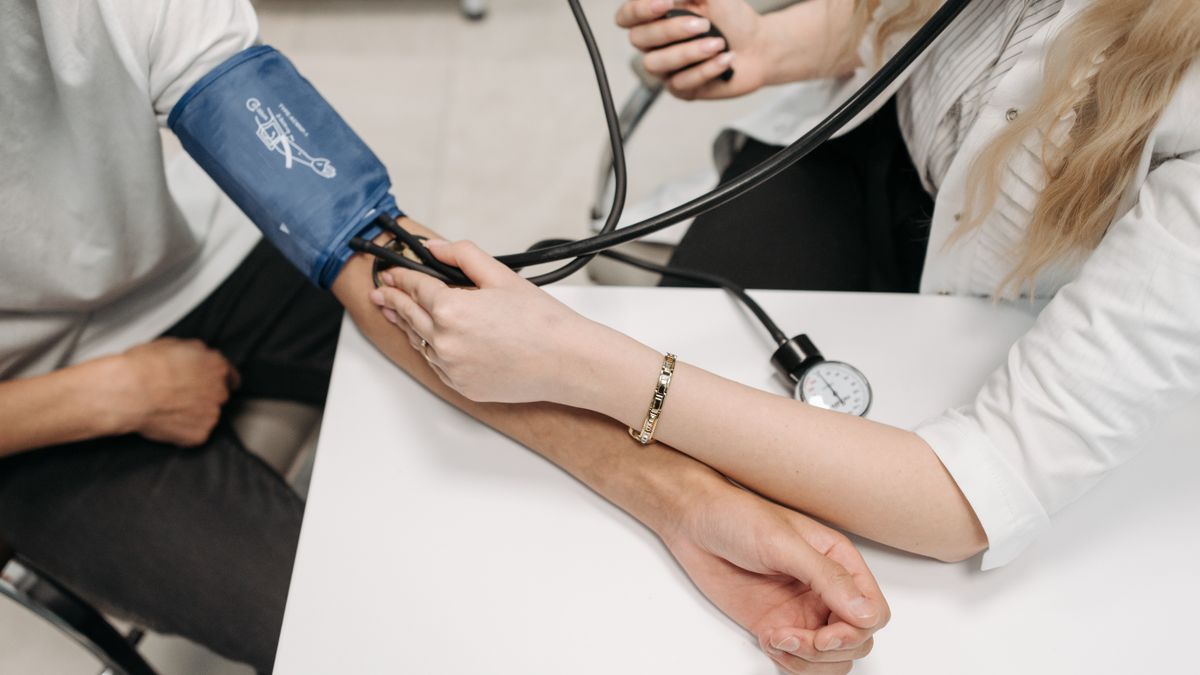
That is also why the awareness message for hypertension is different from the message for most other conditions on this site. For measles, the message is vaccination; for skin cancer, it is sun protection. For hypertension, the message is a measurement: a blood pressure check, at a clinic, a pharmacy or a community screening, repeated over time. The check is quick, it does not hurt, and it is the only route from the unaware 44% into the diagnosed group.
Why it matters: the heart, the brain, the kidneys
Hypertension is a major cause of premature death worldwide (WHO). It damages the arteries over years, and through them the organs the arteries supply: the heart, the brain and the kidneys. It is a leading cause of heart attack and stroke — the cardiovascular diseases guide on this site records that 19.8 million people died from cardiovascular diseases in 2022, and raised blood pressure is one of the main drivers of that toll. It also damages the kidneys, which is one of the links between hypertension and the kidney disease that appears in the diabetes guide.
None of that damage announces itself while it is happening. That is the point the “silent” label is trying to make, and it is worth repeating without softening: a person can feel entirely well while their blood pressure is high enough to damage their arteries. The absence of symptoms is not evidence of absence.
What raises blood pressure, and what lowers the risk
What raises the risk
The risk factors WHO names for hypertension overlap heavily with those for cardiovascular disease and diabetes: unhealthy diet (including too much salt), physical inactivity, excess weight, harmful use of alcohol and tobacco use. Air pollution is named by WHO as the most significant environmental factor for blood pressure. Age also raises the likelihood — blood pressure tends to rise as people get older — and family history plays a part.
Lowering the risk
The prevention side follows the same list in reverse: eating less salt, a healthy diet, regular physical activity, keeping a healthy weight, limiting alcohol and not using tobacco. Those are population-level measures, and WHO pairs them with health-system measures: in 2021 WHO released a guideline on the pharmacological treatment of hypertension in adults, and its 2023 global report on hypertension estimated that scaling up treatment coverage could avert 76 million deaths between 2023 and 2050. That last figure is a measure of the treatment gap above, not a promise to any individual: it says how much is at stake in moving people from the unaware and untreated groups into controlled treatment.
This page does not describe medicines, doses or treatment plans. Control, once hypertension is diagnosed, is a matter for a health professional, and the medicines and targets differ by country and by the individual. The awareness-level point is only that control is possible, that it is measured by repeat readings, and that it is worth asking a health professional about after a high reading.
What this page is, and when it goes out of date
This page is awareness-only: it explains what hypertension is, using WHO’s hypertension fact sheet published 25 September 2025 and its cardiovascular diseases fact sheet published 31 July 2025. It does not diagnose, treat, or advise any individual, and it does not describe any medicine, dose, or course of care. Its figures are for 2024, the latest year in the WHO fact sheet at the time of writing (8 November 2026). WHO updates the fact sheet when new global estimates are published, so the figures here will go out of date when the next edition appears — the linked WHO fact sheet is the place to check for the newest numbers. Where guidance differs between countries, notably the 140/90 mmHg diagnostic threshold used here against the 130/80 mmHg threshold used in the United States, this page states WHO’s figure as WHO’s; WHO’s fact sheet itself uses below 130/80 as a treatment goal for people at higher risk, not as the diagnostic line.
Frequently asked questions
What is hypertension?
High blood pressure: blood pushing against the walls of the arteries with too much force over time. WHO defines it as a reading of 140/90 mmHg or higher on two different days.
How many people have hypertension?
An estimated 1.4 billion adults aged 30–79 worldwide in 2024 — 33% of that age range, up from 650 million in 1990 (WHO). Two-thirds live in low- and middle-income countries.
How would I know if I have it?
Usually you would not feel it — about 600 million adults with hypertension (44%) are unaware they have it (WHO). It is found by measuring blood pressure, not by symptoms.
Can hypertension be prevented or controlled?
Risk can be lowered by eating less salt, a healthy diet, regular physical activity, a healthy weight, limiting alcohol and not using tobacco. Control, once diagnosed, is a matter for a health professional — this page does not describe medicines or doses.