
On this page
- What WASH means
- Water
- Sanitation
- Hygiene
- The JMP ladder, in plain words
- The gaps, in numbers
- WASH in health facilities
- A human right
- Handwashing: the 20-second rule
- What WASH is not
- Climate-resilient drinking water
- Why is cholera killing so many people in Congo?
- What is the MOLE WASH conference in Ghana?
- When and where is the UN Water Conference 2026?
- Frequently asked questions
Key points
- WASH means water, sanitation and hygiene as systems, not only personal habits. The WHO/UNICEF Joint Monitoring Programme tracks progress worldwide.
- 2.1 billion people still lack safely managed drinking water and 3.4 billion lack safely managed sanitation (JMP Report 2025, data 2000–2024).
- The JMP ladder runs from open defecation up through unimproved, limited and basic services to safely managed services.
- Clean water and sanitation are recognised as a human right (UN General Assembly Resolution 64/292).
Direct answer: WASH stands for water, sanitation and hygiene, the systems that deliver safe drinking water, manage human waste, and keep hands clean across a whole population. The WHO/UNICEF Joint Monitoring Programme (JMP) tracks progress worldwide, and its 2025 report puts the gaps at 2.1 billion people without safely managed drinking water and 3.4 billion without safely managed sanitation. This article explains the JMP ladder, the scale those numbers are measured on, in plain words.
What WASH means
WASH is three systems, not three habits.
The distinction matters because a household can have one without the others, a tap but no toilet, a toilet but no soap, and each gap carries its own risk. That is why the JMP measures all three separately, and why “access to water” on its own is not the whole story.
Water
Water means the supply of drinking water: where it comes from, whether it is treated, and whether it reaches the home.
Sanitation
Sanitation means what happens to human waste: toilets, sewers, treatment, and safe disposal.
Hygiene
Hygiene means the practices that stop germs spreading, above all handwashing with soap and water.
The JMP ladder, in plain words
The JMP sorts every household onto a ladder for each of water, sanitation and hygiene. The rungs, from the bottom up, are:
| Rung | What it means |
|---|---|
| Safely managed | The top rung. Drinking water from an improved source that is on the premises, available when needed, and free from faecal and priority chemical contamination. Sanitation: a toilet that is not shared, where waste is safely disposed of or treated off-site. Hygiene: a handwashing facility with soap and water at home. |
| Basic | Drinking water from an improved source, with collection taking no more than 30 minutes round trip. Sanitation: an improved toilet that is not shared with other households. Hygiene: a handwashing facility with soap and water at home. |
| Limited | Drinking water from an improved source, but collection takes more than 30 minutes. Sanitation: an improved toilet shared with other households. Hygiene: a handwashing facility without soap or water. |
| Unimproved | Drinking water from an unprotected well or spring. Sanitation: a pit latrine without a slab, a hanging latrine, or a bucket latrine. Hygiene: no handwashing facility at home. |
| Open defecation / surface water | No toilet at all: defecation in fields, forests, water or other open spaces. Drinking water taken directly from a river, lake, pond or stream. |
An “improved” source is one that, by design, protects water from outside contamination, a piped supply, a protected well, a borehole, rainwater collection. “Improved” does not by itself mean safe: water from an improved source can still be contaminated, which is why the top rung adds testing for faecal and chemical contamination.
The gaps, in numbers
The JMP Report 2025, covering data from 2000 to 2024, puts the global gaps at 2.1 billion people without safely managed drinking water, 3.4 billion without safely managed sanitation, and 1.7 billion without basic hygiene services at home. Within those totals, 106 million people drink directly from untreated surface sources, and 354 million people practise open defecation.
Progress is real but slow. The share of the world’s population with safely managed drinking water has risen steadily since 2000, but at the current pace the gaps will not close by 2030, the year the Sustainable Development Goals set for universal access. For what these gaps mean for children specifically, see Clean water and children’s health.
WASH in health facilities
The gaps are not only in homes. The JMP’s 2026 report on WASH in health care facilities found that only 40% of facilities worldwide have basic sanitation services. A clinic without clean water, a working toilet and soap cannot keep its own patients safe, which is why WASH in facilities is tracked separately from WASH in households, and why it is treated as a health-system issue rather than a household one.
The full 2025 picture from the same report: 85% of facilities had basic water services, up from 76% in 2015, but 11% had no water service at all, serving 907 million people. Basic sanitation stood at 40%, and 11% of facilities had no sanitation service, serving 936 million people. Basic hygiene reached 72%, up from 55% in 2015, while 8% of facilities had no hygiene service, serving 652 million people.
A human right
In 2010 the UN General Assembly recognised the right to safe and clean drinking water and sanitation (Resolution 64/292), and the UN Committee on Economic, Social and Cultural Rights had already set out the right to water in its General Comment 15. The right does not mean water is free; it means governments must work toward everyone having enough safe water for personal and domestic use, without discrimination. That framing is why WASH sits in the systems hub of this site alongside housing, education and income: it is a condition of life, not a consumer choice.
Handwashing: the 20-second rule
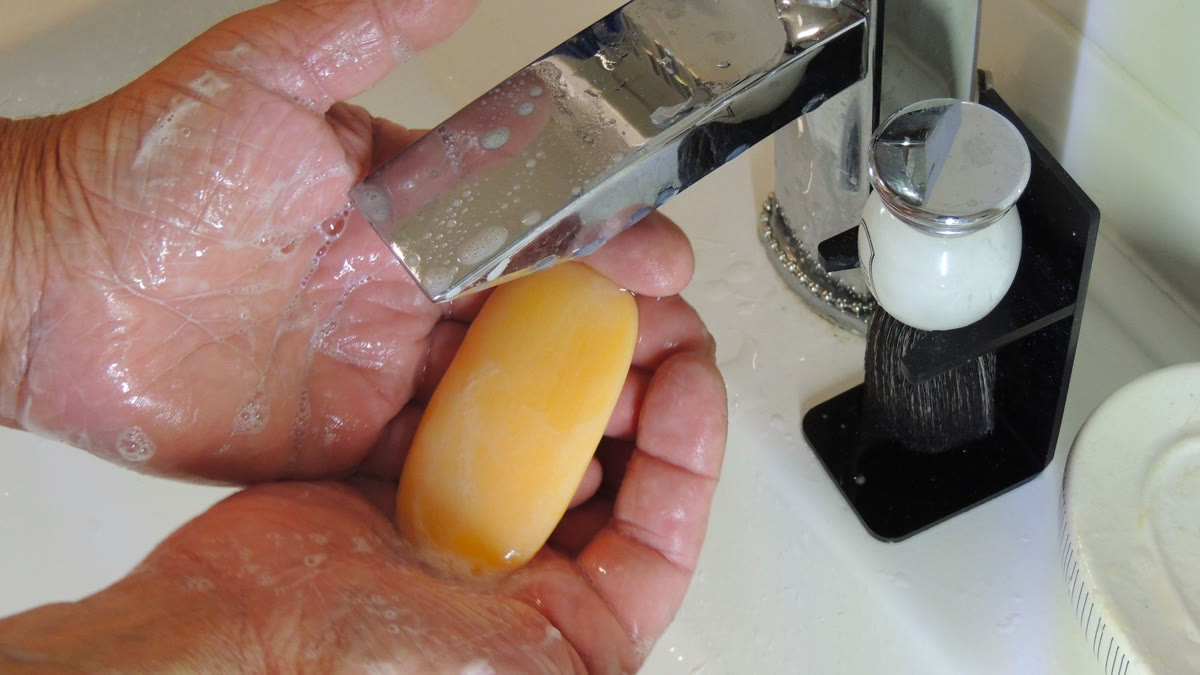
Handwashing with soap and water for at least 20 seconds is the CDC’s stated scrubbing time, and it is the single hygiene behaviour the JMP tracks. The steps are the official ones: wet hands, apply soap, lather all surfaces including between fingers and under nails, scrub for 20 seconds, rinse, and dry. The site’s WASH tool times the 20 seconds and quizzes the steps, a general timer, not personal advice.
What WASH is not
WASH is not a set of instructions for any individual’s health, and this article gives none. It describes systems and population figures: who has safe water, who does not, and how the gap is measured. Where to find help in a specific place is a question for local authorities and official services, not for an awareness article.
Climate-resilient drinking water
Climate-resilient drinking water means water services designed to keep supplying safe water despite climate stressors: drought that dries sources, floods that contaminate them, rising temperatures, and sea-level rise that pushes salt water into coastal aquifers. It is a systems question, not a household one — the pipes, treatment, storage and monitoring that keep water safe when the weather stops cooperating. WHO frames it as one of the priority climate-and-health actions: its 2026 report Global Benefits and Costs of Priority Actions on Climate Change and Health lists climate-resilient drinking water services among six proven measures that could save 1.6 million lives a year (as reported by Daily Sabah, 4 November 2026), alongside heat-health warning systems, basic sanitation, hygiene and handwashing facilities, cleaner household fuels, and efficient fossil fuel pricing. WHO’s climate and health fact sheet likewise calls for supporting resilience and adaptation in health-determining sectors such as water and food. The point is the same as the rest of this guide: safe water is a system, and a system that fails in a drought or a flood was never safely managed in the first place.
Why is cholera killing so many people in Congo?
Cholera is spreading in the Democratic Republic of Congo alongside an Ebola outbreak. From January to the end of September 2026, more than 51,412 suspected cholera cases were reported, including 1,487 deaths, across 21 provinces; from January 2025 to the end of September 2026 the totals were more than 125,000 cases and 3,644 deaths. That is a case fatality rate of about 2.9% in 2026 — calculated from the two reported figures. The provinces of South Kivu, North Kivu and Haut-Katanga account for nearly 60% of reported cases. WHO points to a lack of access to clean water and sanitation, insecurity restricting access to care (including in Kibua, Masisi), remote villages delaying treatment, and contamination of well water and rainfall as the drivers. Cases were still rising in late September 2026: 2,932 suspected cases and 86 deaths were recorded in the week ending 28 September, up from 2,506 cases and 62 deaths the week before. Cholera itself is covered in depth in Cholera: why it keeps coming back, and the wider diarrhoeal disease picture in Diarrhoeal disease: water and young lives.
What is the MOLE WASH conference in Ghana?
MOLE is Ghana’s flagship water, sanitation and hygiene (WASH) conference, convened by the Coalition of NGOs in Water and Sanitation (CONIWAS) since 1989. The 37th edition, MOLE XXXVII, took place from 1–6 November 2026 at Aqua Safari in the Greater Accra Region, under the theme “Accelerating Climate-Resilient WASH Service Delivery for Last-Mile Communities: Options, Strategies and Actions”. It has four sub-themes — political priority, financing, service delivery innovation, and climate resilience in public institutions — and aims at universal WASH by 2030, in line with Sustainable Development Goal 6.
When and where is the UN Water Conference 2026?
The 2026 UN Water Conference takes place from 8–10 December 2026 at the Abu Dhabi National Exhibition Centre (ADNEC) in Abu Dhabi, United Arab Emirates, co-hosted by the UAE and the Republic of Senegal. Its mandate is to accelerate implementation of Sustainable Development Goal 6 — clean water and sanitation for all. The conference is organised around six interactive dialogues: Water for Cooperation, Water for Prosperity, Water in Investments, Water for People, Water for Planet, and Water in Multilateral processes. The background is stark: as of 2024, 2.1 billion people lacked safely managed drinking water, 3.4 billion lacked safely managed sanitation, and 1.7 billion lacked basic hygiene services.
Frequently asked questions
What does WASH stand for?
Water, sanitation and hygiene, the three linked systems that keep drinking water safe, human waste managed and hands clean at population level.
What is safely managed drinking water?
Drinking water from an improved source that is on the premises, available when needed, and free from faecal and priority chemical contamination. It is the top rung of the JMP drinking-water ladder.
Is handwashing really part of a health system?
Yes. Hygiene is the third part of WASH, and the JMP tracks it alongside water and sanitation because handwashing with soap breaks the spread of disease at population level.